On February 20, 2026, the US-Taiwan Business Council celebrates 50 years since its founding in 1976, highlighting our sustained commitment to strengthened trade and investment ties between the United States and Taiwan.
For five decades, USTBC has supported U.S. companies in Taiwan by providing business intelligence and high-level dialogue, and the Council has served as an effective representative on bilateral business, trade, and economic matters. As we commemorate our 50th anniversary year in 2026, USTBC looks forward to new challenges. We are excited to continue working with our members and friends on expanding trusted supply chains, fostering innovation, and promoting a resilient and mutually beneficial U.S.-Taiwan business partnership.
US-Taiwan Business Council Timeline
Chairmen
1976-1991 – David M. Kennedy
1991-1995 – Caspar W. Weinberger
1995-1997 – Daniel M. Tellep
1997-1999 – William P. Clark
1999-2003 – Frank C. Carlucci
2003-2005 – William S. Cohen
2005-2008 – William Emerson Brock
2008-2018 – Paul D. Wolfowitz
2018-2023 – Michael R. Splinter
2024-present Keith J. Krach
Presidents
1976-1990 – William “Bill” Morell, Jr.
1990-2000 – David N. Laux
2000-present – Rupert J. Hammond-Chambers
Legal Name Changes
1976 – Incorporated in Chicago, Illinois as U.S.-Republic of China Economic Council
1996 – Incorporated in Washington, D.C. as US-ROC (Taiwan) Business Council
2001 – Name changed to US-Taiwan Business Council
History Highlights
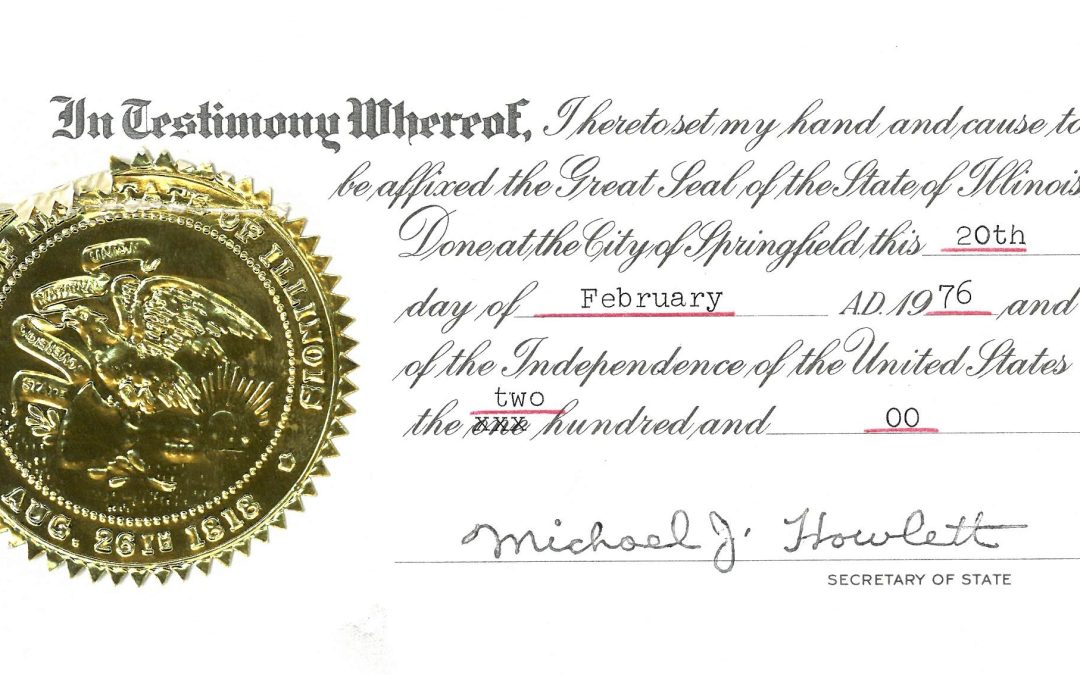
The US-Taiwan Business Council was formed as the U.S.-Republic of China Economic Council in 1976 by David M. Kennedy, Secretary of the Treasury for two years under President Nixon and former Ambassador to NATO. The Council was legally created in Chicago, Illinois, and the original Articles of Incorporation are dated February 20, 1976. Ambassador Kennedy served as the first Chairman of the Council, with William “Bill” Morell, Jr. serving as the President of the organization.
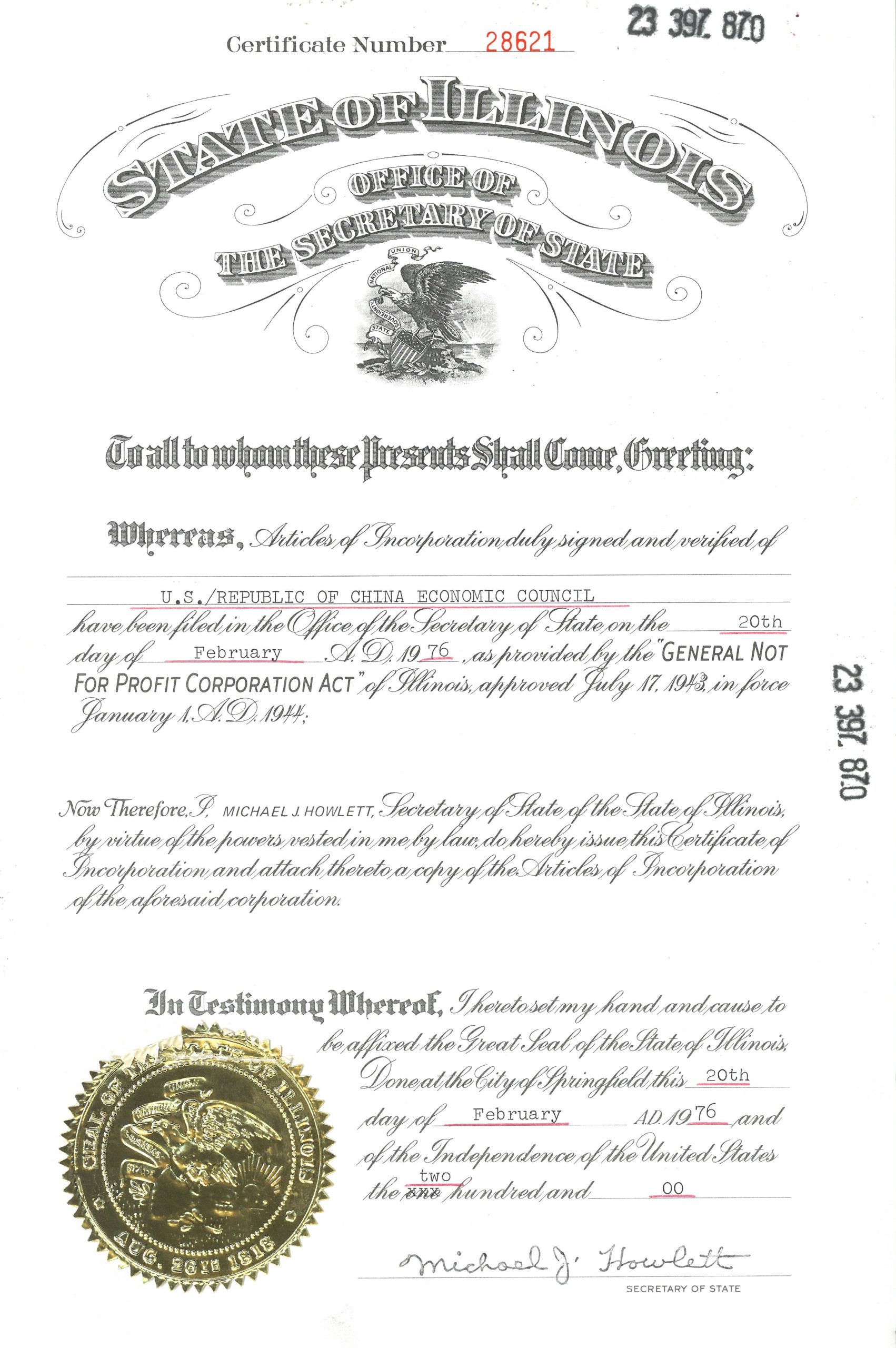
1976 Articles of Incorporation – U.S.-ROC Economic Council in Chicago, Illinois
At that time, the United States had full diplomatic relations with the Republic of China on Taiwan. Chairman Kennedy was impressed with Taiwan’s economic development. He felt that a private business council, with a counterpart organization in Taiwan, could do a lot to continue to promote economic development and could play an important role in U.S.-Taiwan relations. On the Taiwan side, the driving force to form a partnership Council there came from Y.S. Sun, the Minister of Economic Affairs who later became Premier. The U.S. Council conducted business as the USA-ROC Economic Council, while the ROC-USA Economic Council (now the ROC-USA Business Council) served as the sister Council and partner in Taiwan.
Most of the Council’s founding members were Chicago area companies. The organization grew rapidly, however, with businesses from all around the country joining. As it grew, the Council felt an annual forum was needed to showcase U.S.-Taiwan business opportunities. The two Councils determined that they would hold a series of joint conferences alternating between the U.S. and Taiwan. The first Joint Conference was held in Chicago in October 1977. Taiwan had just become the United States’ 8th largest trading partner, and trade issues dominated the conference agenda. The 1978 Joint Business Conference in Taipei focused on opportunities in Taiwan for U.S. companies.
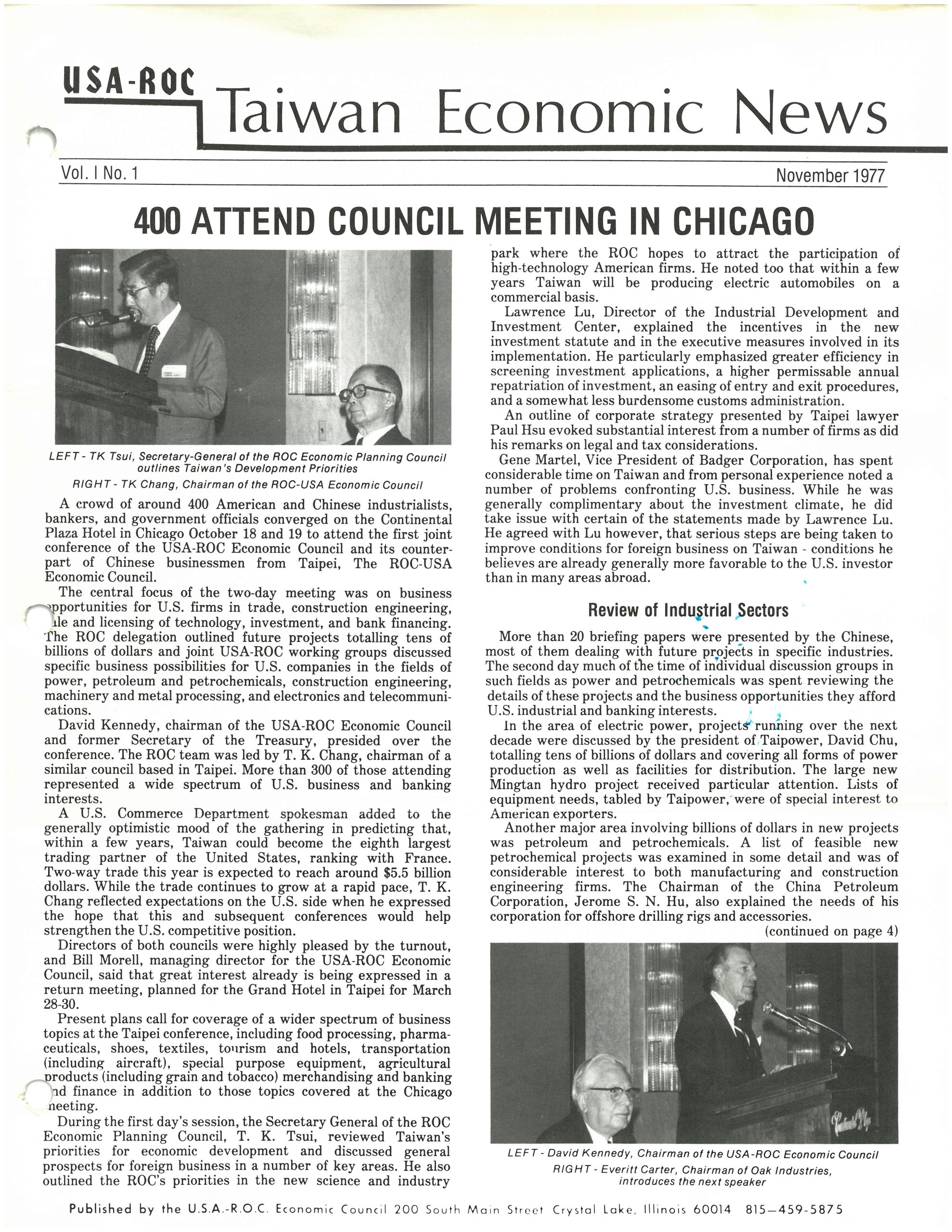
Taiwan Economic News – Volume 1. Number 1. (November 1977)
The following two years were dominated by congressional hearings and the drafting and passing of the Taiwan Relations Act. The Council was heavily involved in commenting on all aspects of the Taiwan legislation, and it was the subject of much discussion at the joint conferences in 1979 and 1980.
The founding Chairman of the ROC-USA Economic Council, T.K. Chang, passed away in 1981. His replacement was C.F. Koo, a highly respected finance and business leader. C.F. Koo remained Chairman of the ROC Council for 12 years until he stepped down in 1993 and was succeeded by his nephew Dr. Jeffrey L.S. Koo.
From 1981 through 1989, the Council focused on developing strong business relations between the U.S. and Taiwan to make up for the lack of formal diplomatic relations. The annual joint conferences were useful in promoting the involvement of many U.S. states and their trade organizations, and in promoting procurement missions from Taiwan in agriculture, machinery, environment and health, as well as focusing on banking, financial, and investment issues. Future U.S. President William J. Clinton attended the 1986 joint conference in Taipei during his tenure as Governor of Arkansas.
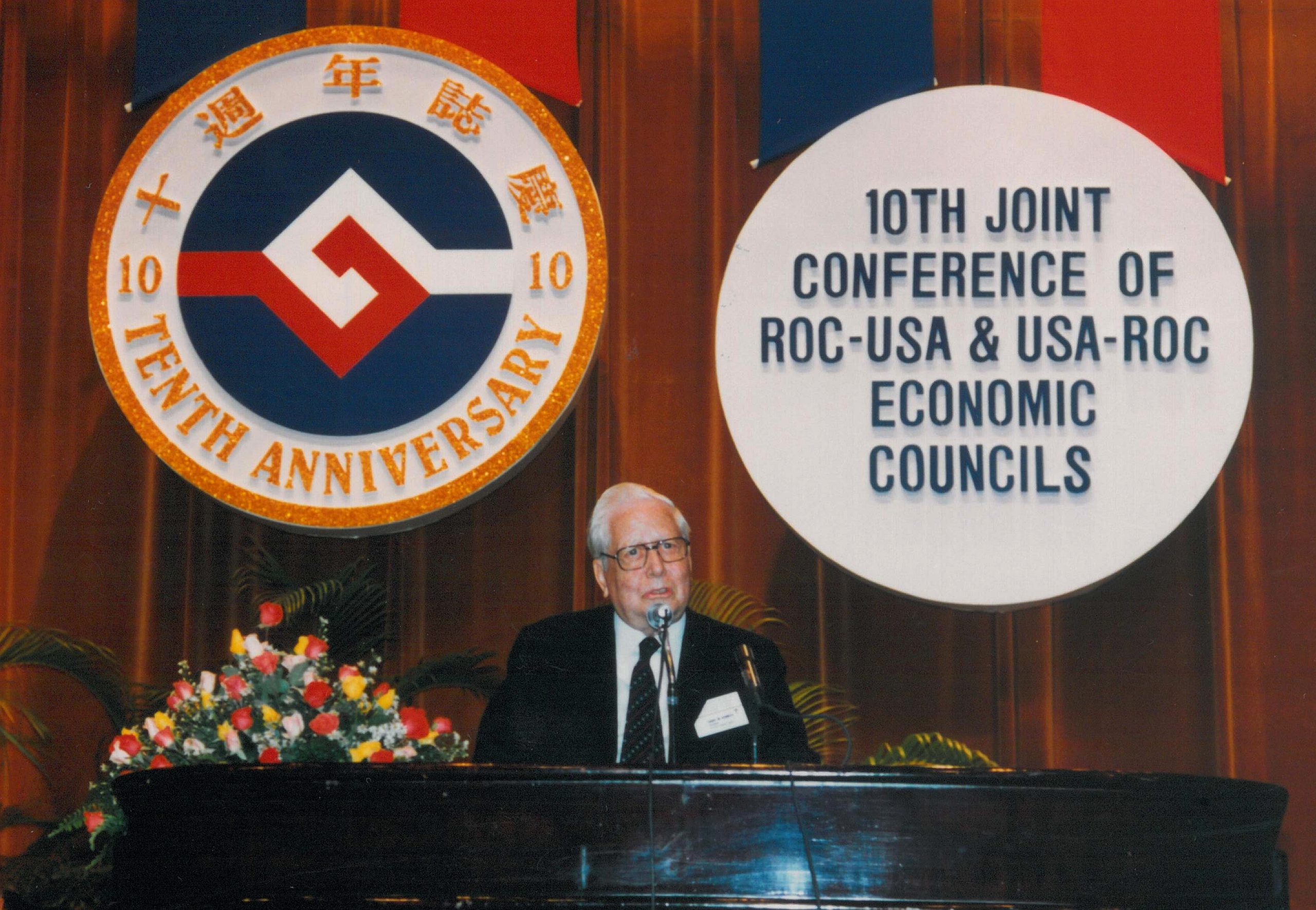
Chairman David Kennedy at the 10th Joint Business Conference (1986)
In 1990, David Laux became President of the Council, and the same year Caspar Weinberger became Chairman. The new leadership made several changes, including moving the Council to Washington, D.C. for better access to U.S. government officials and to Taiwan government visitors. The new leadership team resolved to make the Council more active in terms of services and events for members.
The move to Washington D.C. formally took place in 1991, with offices first on H Street, then on Connecticut Avenue, and finally on M Street. Chairman Weinberger also created the “Chairman’s Circle” in 1991 –a group of companies with major interests in U.S.-Taiwan business and trade. In 1992, the Chairman’s Circle and Board of Directors held an important meeting with Vice President Dan Quayle. The Council pushed for U.S. Cabinet level visitors to Taiwan to give U.S. companies the kind of support their European competitors were receiving. In response, the Administration sent USTR Carla Hills to the 1992 joint conference in Taiwan — the first U.S. Cabinet member to visit Taiwan since 1978.
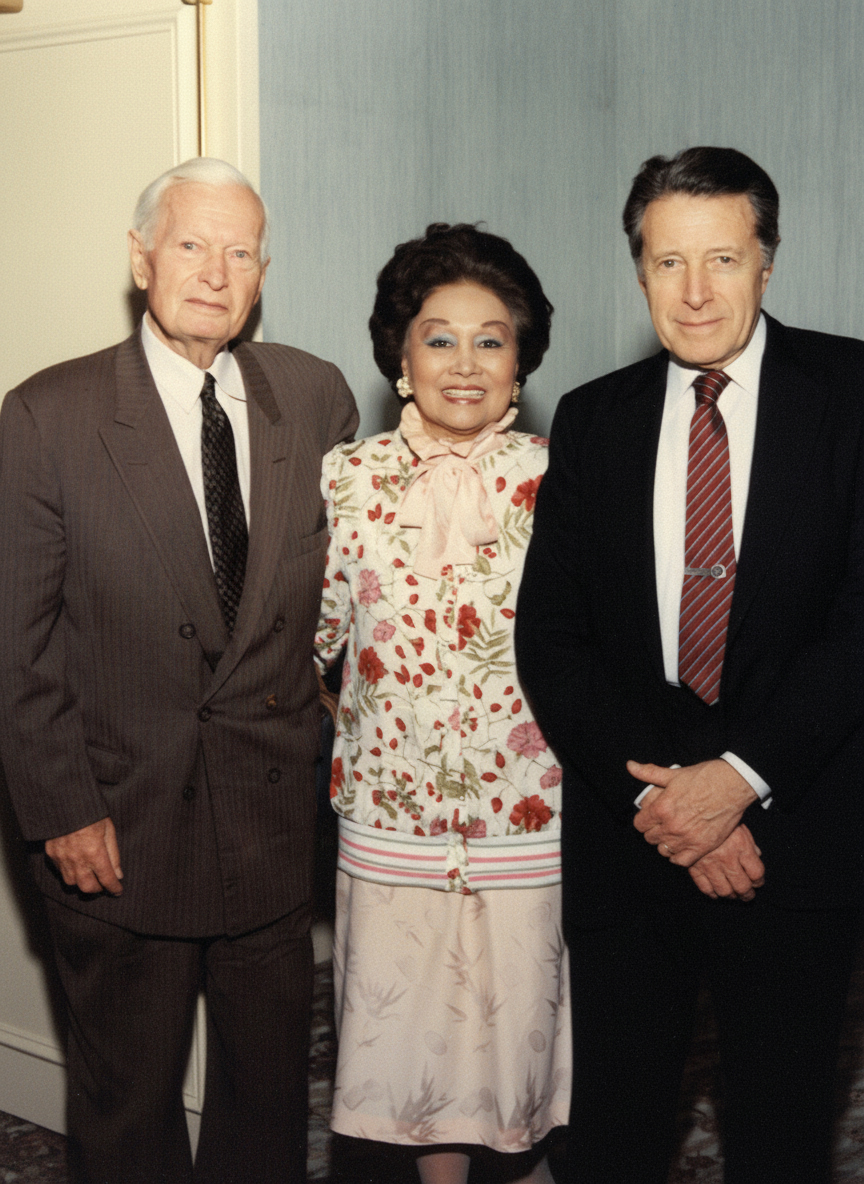
Chairman Caspar Weinberger (right) and founding Board member Anna Chennault in 1991
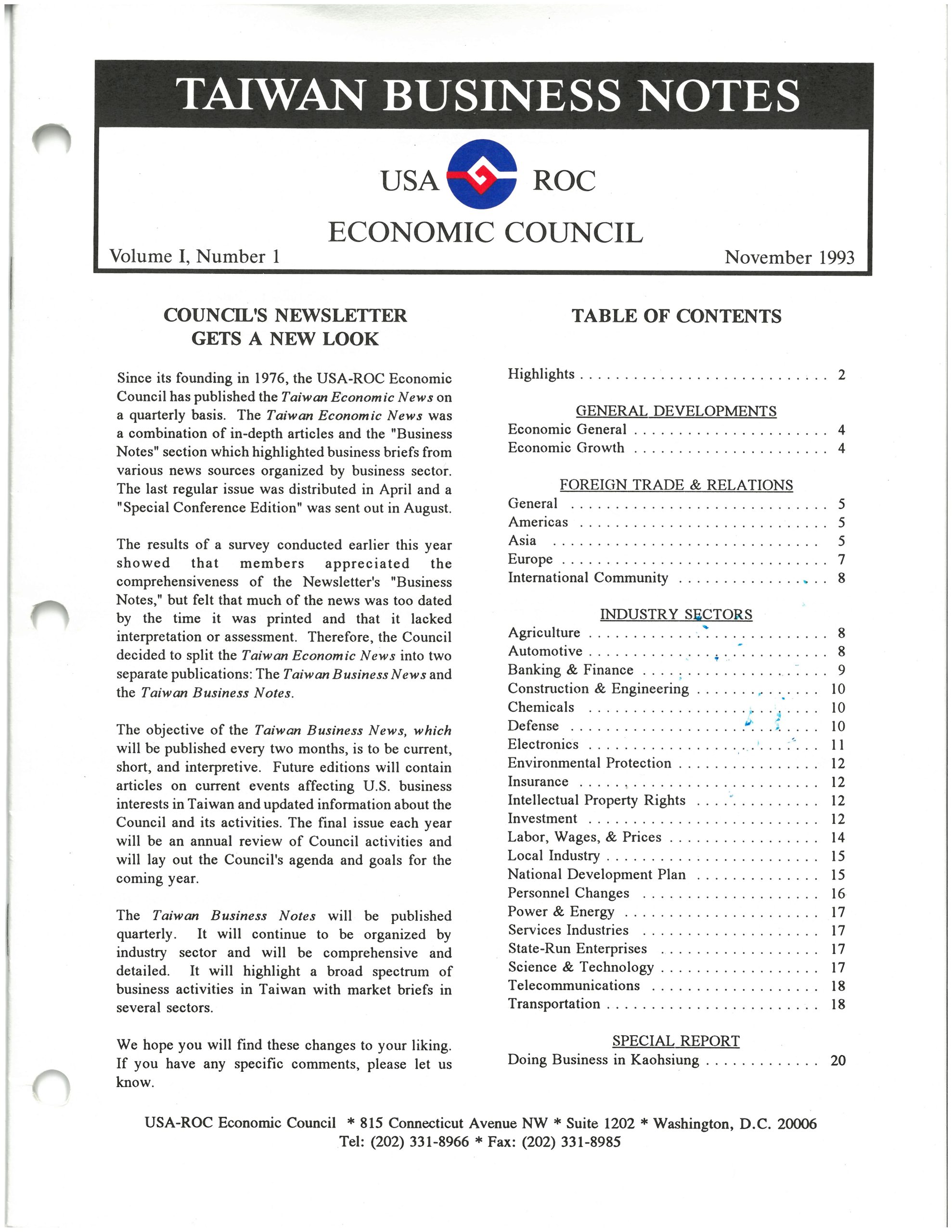
Starting in 1992, the Council was approved for a series of U.S. Trade and Development Agency grants to study Taiwan’s Six-Year National Development Plan, to bring the study results to the U.S. business community through a six-city roadshow, and to bring four Taiwan delegations of key decision-makers in the telecommunications and environmental protection sectors to the United States. The 1992-1994 period was very active. The Council formed several industry sector committees, split its large quarterly newsletter into bimonthly Taiwan Economic News and Taiwan Business Notes, expanded the Board of Directors, and played a role in several major business deals – including the George H. W. Bush administration’s decision to sell F-16’s to Taiwan.
The footprint of the annual joint conferences continued to grow. In 1994, Taiwan President Lee Teng-hui attended and spoke for the first time, along with former President George H.W. Bush. Transportation Secretary Federico Pena attended as the first Cabinet member to visit Taiwan in the Clinton Administration.
In 1995, aerospace executive Daniel M. Tellep joined the Council as Chairman. Also in 1995, the Council held a memorable Chairman’s Circle meeting with President Lee Teng-hui at Cornell University during his famous visit to the United States. The same year, the Council stopped producing the bimonthly hard copy editions of its newsletters, moving instead to a Monthly Fax Update. The 1996 conference in Taipei again featured an address by President Lee, along with a speech by Phil Lader, Administrator of the Small Business Administration, as the Cabinet-level U.S. representative.
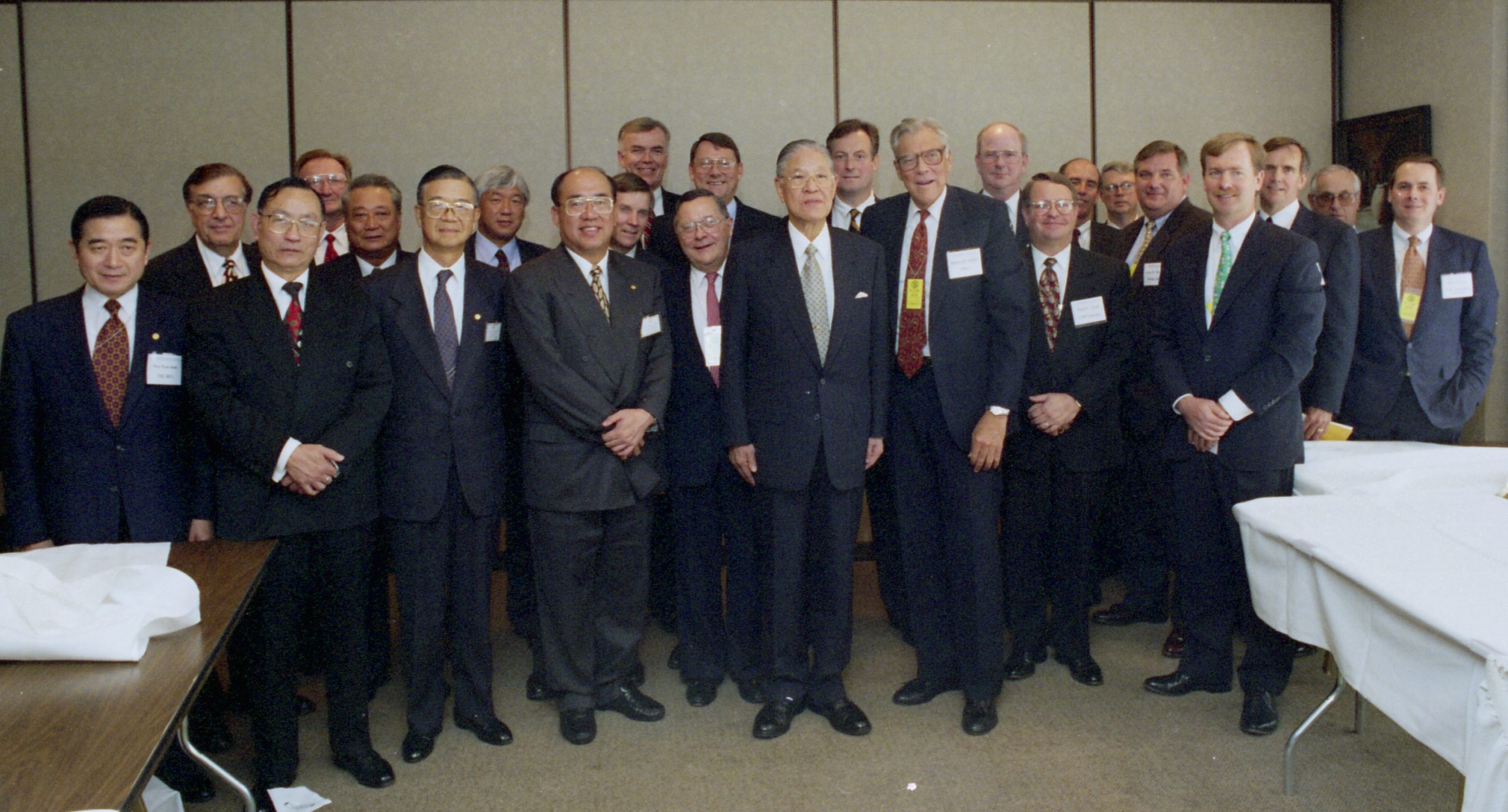
Lee Visit to Cornell in 1995 – Group Picture with President Laux, members of the Board, and members of the Chairman’s Circle
In 1996, the Council legally incorporated in the District of Columbia and changed its name to the US-ROC (Taiwan) Business Council. William P. Clark, former National Security Adviser and Secretary of the Interior in the Reagan Administration, was elected Chairman in 1997. Senators Frank H. Murkowski (R) of Alaska, and John D. Rockefeller, IV (D) of West Virginia also became Honorary Co-Chairs of the Council that year.
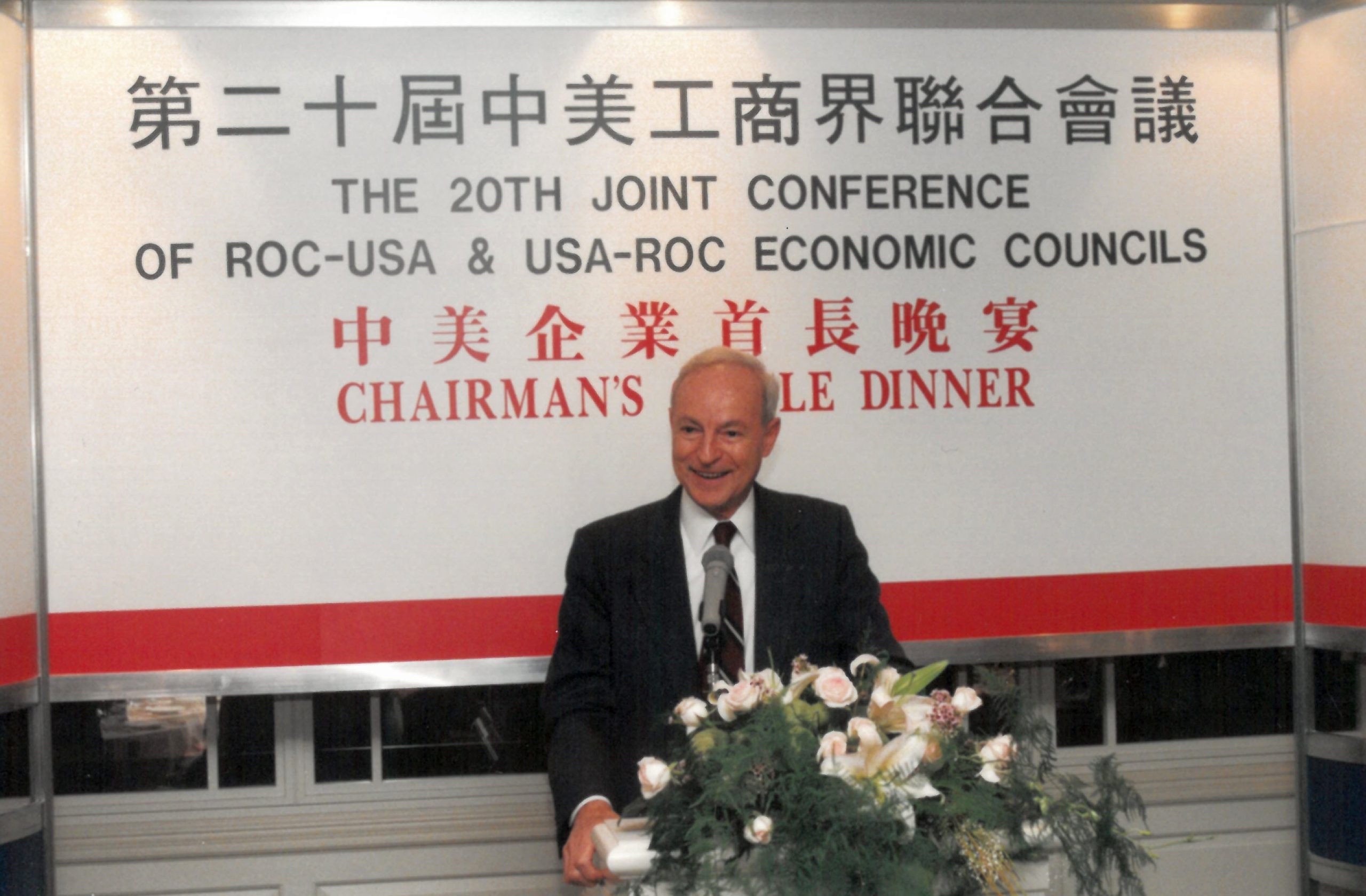
Chairman Dan Tellep at the 20th Joint Business Conference (1996)
During 1997-1998, the Council held many events for visiting VIPs from Taiwan and expanded its interactions with the Taipei Economic & Cultural Representative Office (TECRO). In addition, the Council held several meetings with USTR to provide collective U.S. industry input to the ongoing negotiations with Taiwan on the terms of their accession to the WTO. In 1998, weekly email bulletins replaced the Monthly Fax Update as a venue for Council members to receive information on the business environment in Taiwan.
In 1999, the Council moved to Rosslyn in Arlington, Virginia, next-door to the American Institute in Taiwan (AIT). It was another active year that included events celebrating the 20th anniversary of the Taiwan Relations Act and supporting several member companies in their bids for major contracts or sales in Taiwan. Frank C. Carlucci, former Secretary of Defense and National Security Advisor, also became Chairman that year.
During 1999-2000, the Council focused especially on strengthening corporate memberships and services in the areas of information technology and telecommunications, and the 2000 Annual Joint Business Conference took place in Taipei immediately following the Word Congress on Information Technology. Taiwan President Chen Shui Bian gave a keynote address during the plenary session, and President Bill Clinton addressed the audience through a letter delivered and read by Secretary of Transportation Rodney E. Slater.
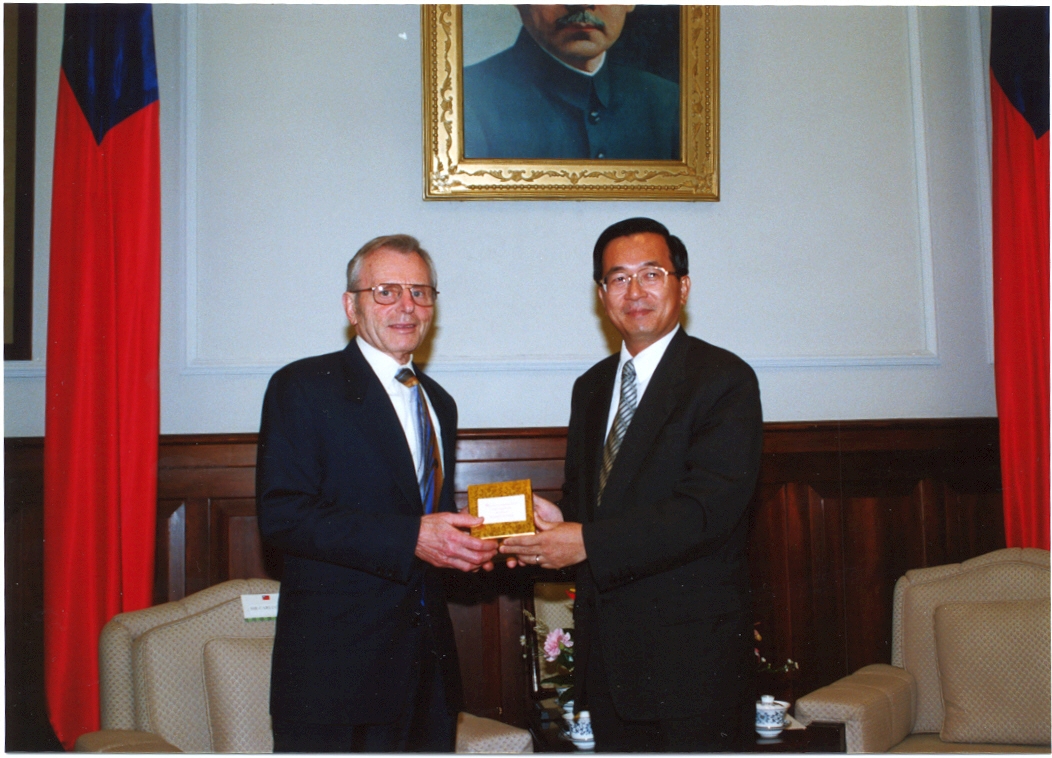
Chairman Frank Carlucci with President Chen
In 2000, President David Laux stepped down after almost 10 years in the position. Rupert Hammond-Chambers, who joined the Council in 1994 and had served as Vice President, Executive Vice President, and Acting President, succeeded him as Council President. In 2001, the name of the organization was changed to the US-Taiwan Business Council.
From 2001-2005, the Council saw a major overhaul of its staff and several new initiatives. It began publishing a new product, the Defense & Security Quarterly Reports, in 2001 – a series expanded in 2002 with Semiconductor Quarterly Reports. The annual joint business conference planned for Boston in September 2001 was cancelled due to the 9/11 attacks. The annual conferences were not held in the U.S. again, as the Council decided to shift from traditional multi-day, multi-subject annual conferences to smaller and sector-specific events. This reflected the more focused business interests of the Council’s members. The first annual U.S.-Taiwan Defense Industry Conference was held in 2002, and featured Taiwan’s Minister of National Defense Tang Yiau-ming and U.S. Deputy Secretary of Defense Paul D. Wolfowitz as keynote speakers.
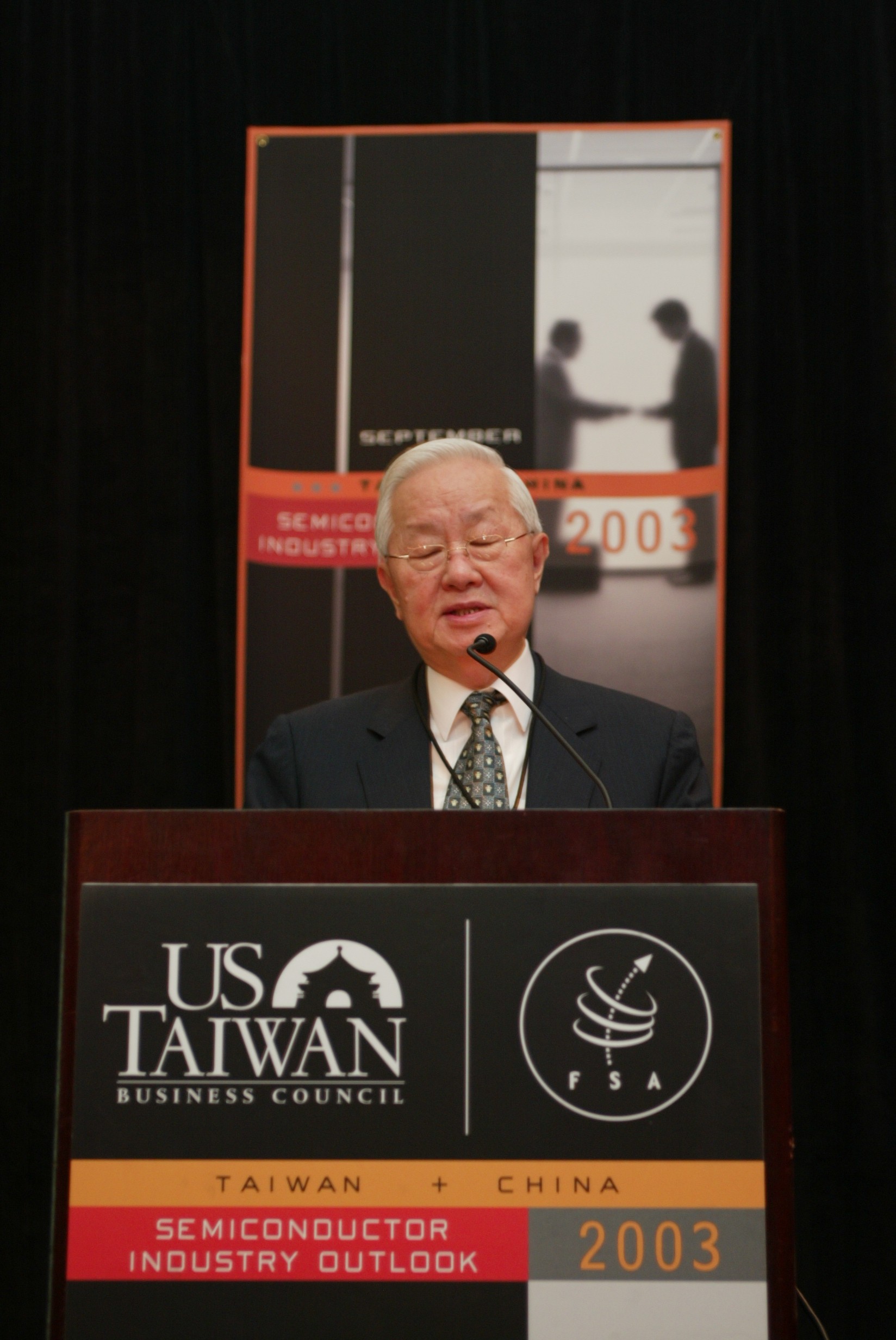
Morris Chang at the 2003 Taiwan+China Semiconductor Industry Outlook Conference
In 2002, former Secretary of Defense William Cohen took over as Chairman. He presided over the first Taiwan + China Semiconductor Industry Outlook Conference in 2003 as well as over an active year in 2004. In 2005, former U.S. Trade Representative William E. Brock became the Council’s Chairman. Chairman Brock joined the Taiwan + China Semiconductor Industry Outlook Conferences in 2006 and 2007. During this time, the Council also began expanding its working relationship with the American Chamber of Commerce in Taipei (now the American Chamber of Commerce in Taiwan).
In 2008, former Deputy Secretary of Defense Paul Wolfowitz became Chairman. The Council welcomed Chairman Wolfowitz to most of the annual U.S.-Taiwan Defense Industry Conferences during his tenure, a full circle from his presence at the first event in the series. The Council also formalized a tradition begun in 2002 where the Council Chairman and President bring a delegation to Taiwan each year for government meetings, for what is now the annual Chairman’s Delegation.
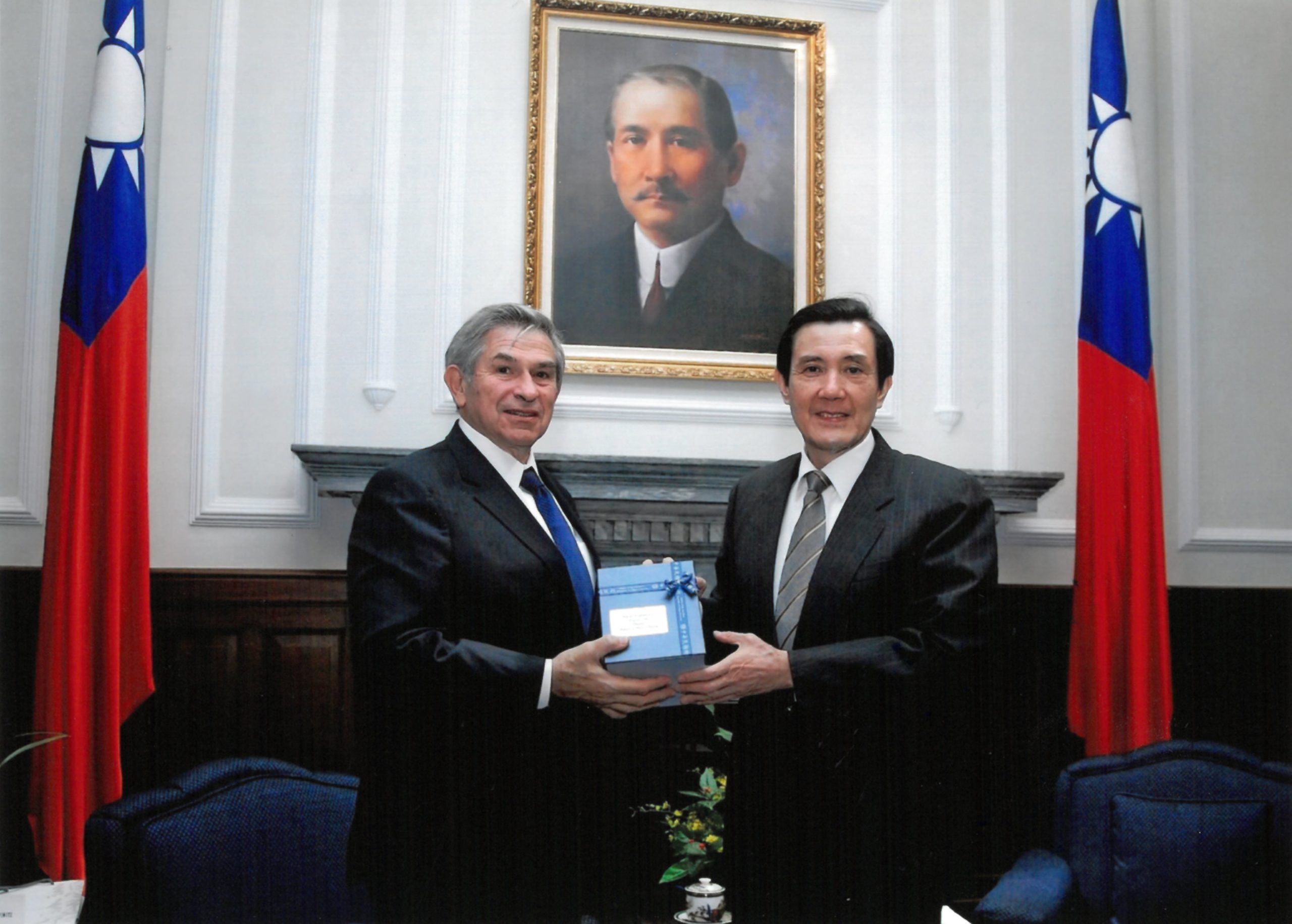
Chairman Paul Wolfowitz with President Ma
The Council published several extensive defense reports during his time as Chairman, including The Balance of Air Power in the Taiwan Strait in 2010, Chinese Reactions to Taiwan Arms Sales in 2012, and The Looming Taiwan Fighter Gap in 2012.
The Taiwan policy environment in the U.S. was less permissive for several years during the two Obama Administrations, and the Council therefore streamlined its services. Council work in 2013 and 2014 focused on bilateral trade issues, a potential bilateral investment agreement, and business to business ties. In 2015, the Council hosted incoming President of Taiwan Tsai Ing-wen for a Board and Chairman’s Circle event during her visit to Washington, D.C. ahead of her official inauguration as President.
The more permissive Taiwan policy environment during the first Trump Administration allowed the Council to increase activity and to host more events. Michael R. Splinter, a veteran of the semiconductor industry, took up the mantle as Chairman in 2018. In May 2018, the Council instituted an annual Defense Delegation, along the same lines as the traditional Chairman’s Delegation. In 2019, Chairman Splinter hosted Taiwan President Tsai Ing-wen at the U.S.-Taiwan Business Summit in New York, with Board and Chairman’s Circle members holding a bilateral trade and investment discussion with her and her delegation during a transit through the U.S. on the way to allies in South America.
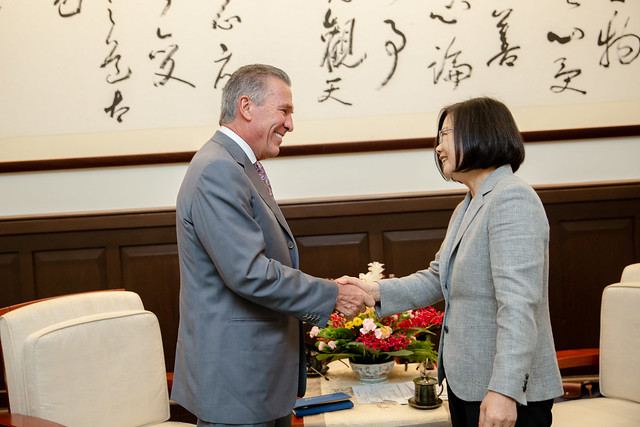
Chairman Mike Splinter with President Tsai
During the pandemic years of 2020 and 2021, the Council primarily hosted its events online, including the 2020 U.S.-Taiwan Defense Industry Conference, although the 2021 defense conference took place in person. During this time, the Council produced several in-house reports on the state of the U.S.-Taiwan bilateral trade and business relationship, including on Taiwan private equity in 2020 and on healthcare and energy in 2021. Starting in 2022, the Council also worked with the Project 2049 Institute (now the Institute for Indo-Pacific Security) on a Semiconductor Report. The final report under this initiative, United States, Taiwan, and Semiconductors: A Critical Supply Chain Partnership, was published in 2023.
In 2023, during the annual Chairman’s Delegation, Taiwan conferred the Order of Brilliant Star with Grand Cordon onto Chairman Emeritus Paul Wolfowitz. This prestigious civilian award was bestowed upon Dr. Wolfowitz by Taiwan President Tsai Ing-wen in a ceremony at the Presidential Office Building in Taipei.
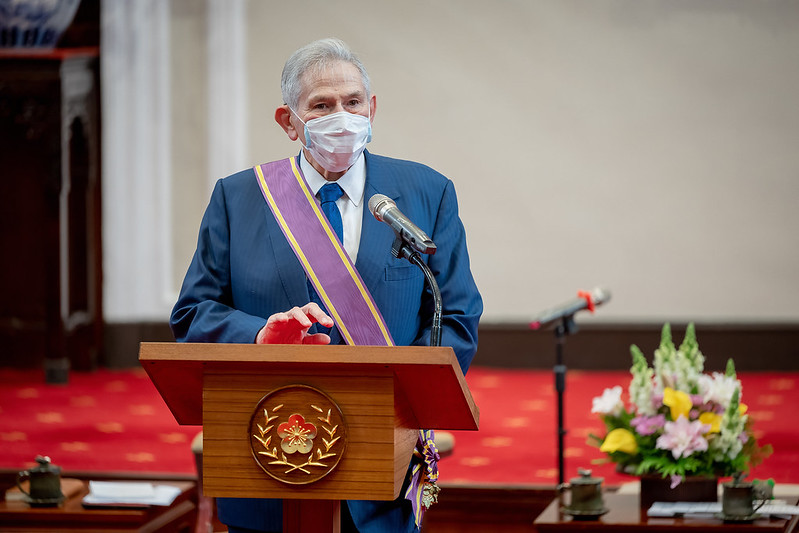
Paul Wolfowitz with Order of Brilliant Star with Grand Cordon. courtesy of the Office of the President
In 2024, Keith J. Krach – who played a key role in redefining US-Taiwan relations as former Under Secretary of State for Economic Growth, Energy, and the Environment – accepted the role as Council Chairman. He has been a stalwart supporter of the Council’s work in Taiwan, and most recently led the 2026 Chairman’s Delegation to Taiwan.
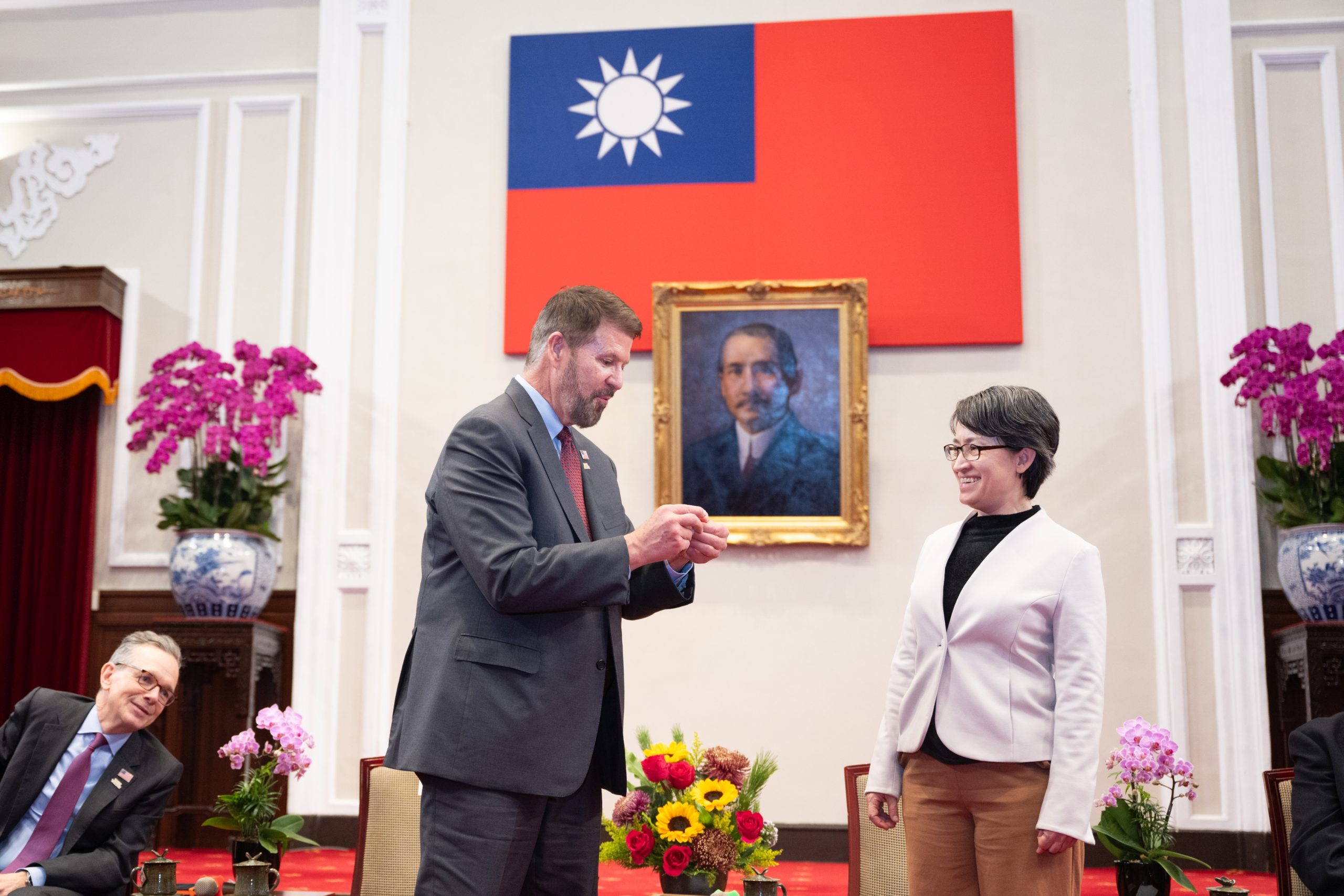
Chairman Keith Krach with VP Hsiao in January 2026 at the Presidential Palace