Media Mention: Council President talks about the Taiwan Arms Sales Freeze on NTD News
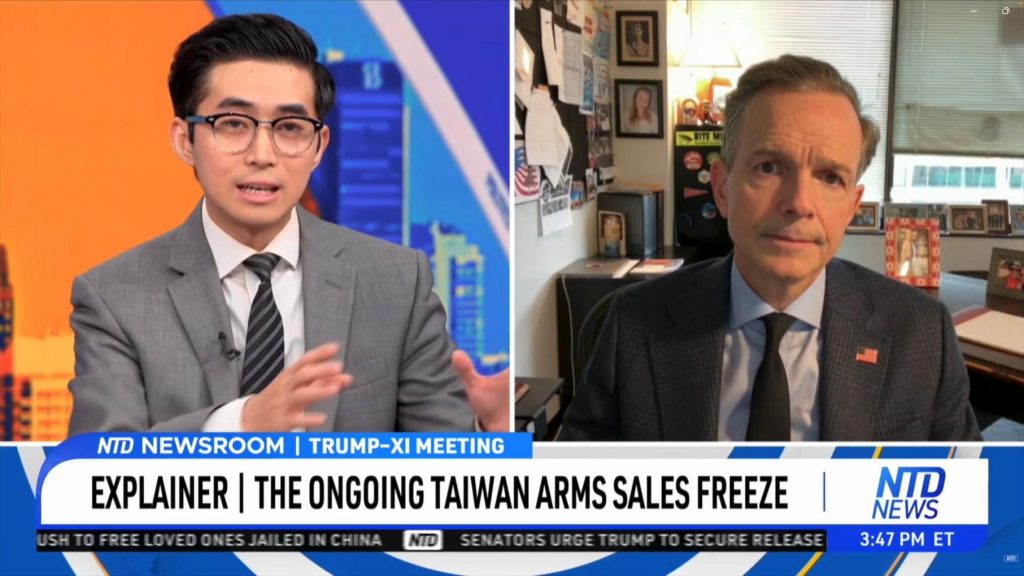
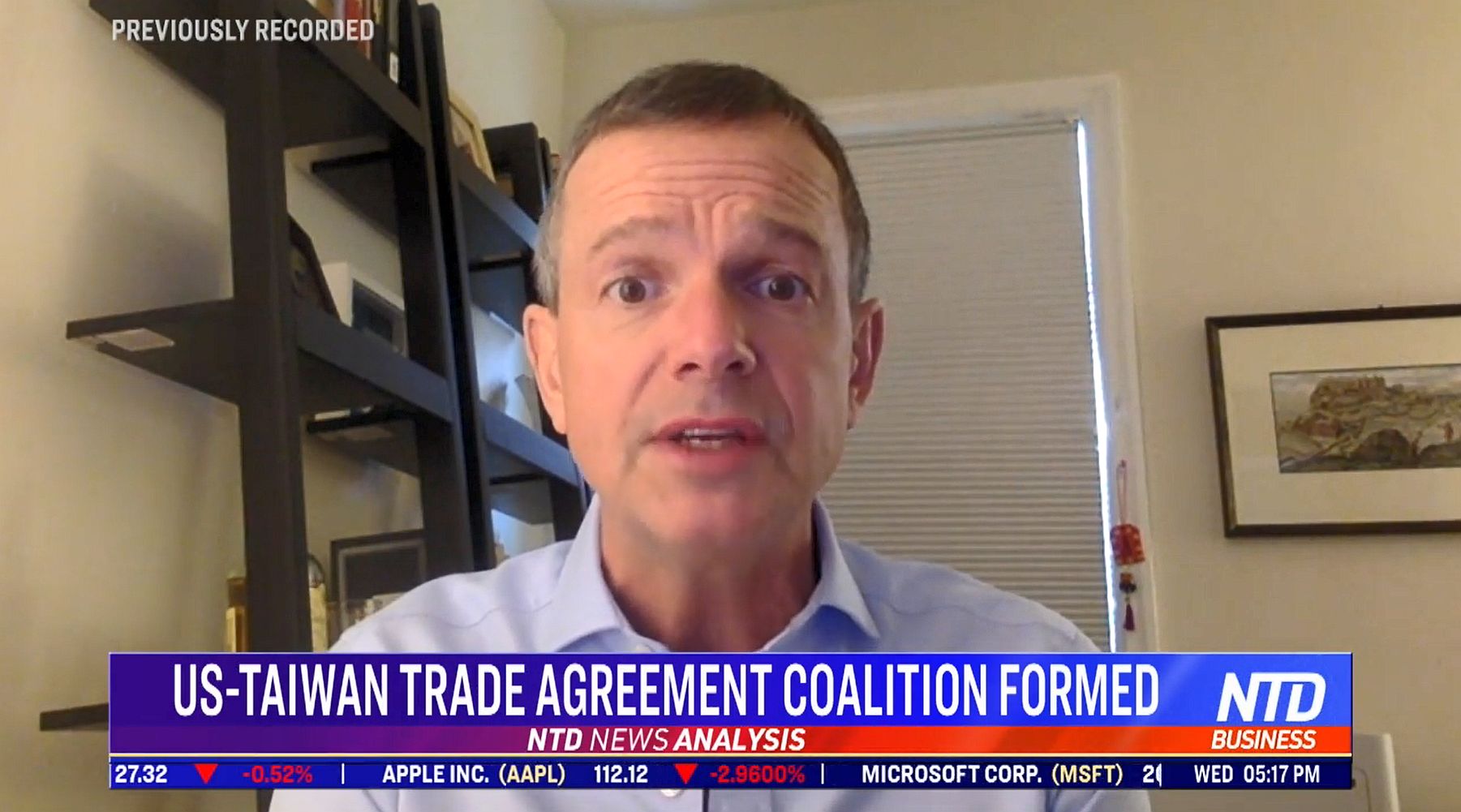
US-Taiwan Business Council President Rupert Hammond-Chambers appeared on NTD News on September 23, 2026. He talked about the ongoing Taiwan arms sale freeze and the importance of U.S. arms sales to Taiwan.
Taiwan force modernization is essential because the battle space is changing constantly. We have different actors that have agency in the Taiwan Strait to affect the direction of the balance of power. The Chinese, of course, are investing hundreds of billions of dollars every year in their military, and that military poses the primary threat to the people of Taiwan. As a consequence, the threat assessment that’s undertaken by the Taiwan military – by our Indo-Pacific Command in Hawaii, by Secretary Hegseth and his colleagues at the Department of War – is constantly updating that threat and constantly changing and adjusting the requirements necessary to fully equip Taiwan to beat that challenge. As well as, frankly, our own forward-deployment of forces and the equipment that they could use to deter – or if there is war, God forbid – that they’re able to not just defend but indeed to defeat the PLA forces attempting to capture the island.
Q: So when there is a freeze on weapons sales to Taiwan, how does the CCP react? How does Beijing view it?
Well, very favorably, I might add. We’ve seen several arms freezes over the past 15 years. If we go back to even a little bit longer, if we go back to the first major one in 2007 and 2008, when the Bush administration tried to curry favor with the Chinese in an effort to gain support from them in denuclearization of the north of the Korean Peninsula. They were happy to pocket that concession over 11 months and there was no commensurate quid pro quo from the Chinese. They did not adjust their behavior or deliver any meaningful efforts to pressure the DPRK.
And then of course we had the four-year arms freeze during Mr. Obama’s term from 2011 to 2015. And we learned further that the Obama administration’s efforts to reduce tensions by halting arms sales did not in fact stop the Chinese, for example, from island-building and militarization of those islands in the South China Sea. Even when they continued to impress upon the Obama administration that they had no intention of doing that. So, we do have these examples of arms freezes. The expectation of sitting U.S. administrations is that there would be a quid pro quo, and they do not result in quid pro quo. And that I’m afraid, regrettably, is the risk that Mister Trump and his colleagues now run as we enter what is in fact the 4th Taiwan arms freeze since 2005.
Source: NTD News